
Boca Raton Address History Sources
An address trail changes with the era. Modern Palm Beach County records begin with a parcel card and recorded deed. Mid-century Boca Raton work adds reverse directory listings, newspapers, and released census schedules. Earlier work may require deed books, county archives, maps, diaries, and manuscript collections. Each source answers a different question, so the useful start depends on whether the goal is ownership, occupancy, a building date, or a family connection.
| Source | Local coverage | Where held | Evidence for an address |
|---|---|---|---|
| Landmark images | January 1, 1968 to present | Palm Beach County Clerk online | Recorded owners, transfer dates, references, and legal description |
| Earlier deed indexes | Before 1968; series vary | Clerk, books, microfilm, archives | Grantor and grantee links in the older title chain |
| Boca Raton directories | 1956 to 1989, with gaps | Boca Raton Historical Society | Named listings and, when included, people by address |
| Federal census | Decennial schedules through 1950 | NARA and library databases | People and relationships in a household |
| Local newspapers | 1938 and later runs | BRHS, library, archives | Sales, moves, deaths, relatives, ads, and notices |
| Permits and maps | Varies by system | City, county, and BRHS | Construction, applicants, parcels, streets, and structures |
Start with the latest reliable record and move backward. A current parcel search supplies the PCN and land description that keep the same property in view even when a street format changes. For a 1970s household, pair a deed with a nearby directory year and newspaper evidence. For a pioneer-era parcel, expect a slower chain through older county materials and local archives.
Fix the Boca Raton Parcel
The Palm Beach County Property Appraiser PAPA search accepts an owner name, street address, or 17-digit Property Control Number, called a PCN. Save the situs address, current assessed owner, municipality, PCN, subdivision, lot or block, sales references, and legal description. Situs means the physical parcel. The mailing address is where the tax notice goes, which may be a post office box, trust, agent, or seasonal address.
Jurisdiction matters in Boca Raton. A postal address using the city name can lie in unincorporated Palm Beach County, especially in western communities. Check the municipality field and parcel map before choosing a permit custodian. Homestead treatment can support owner occupancy, but it does not list all past residents. A parcel card can also lag a newly recorded deed while the appraiser processes ownership changes.
For a hard match, PAPA Advanced Search can combine municipality, ZIP, subdivision, book/page, PCN, and broken-out street fields. Keep the legal description as the stable key. Names alone can collide, and street labels can change.
Note: A Boca Raton mailing label identifies postal service, not city limits, permit jurisdiction, or proof that an assessed owner lived there.
Walk Boca Raton Deeds Backward
Use the parcel card's sale or recording reference in the Landmark Official Records index. The current deed names the buyer as grantee and seller as grantor. Capture the instrument number, date, official-record book and page, party roles, and legal description. Then look for the seller as a grantee in an earlier period. The matching land description shows when that person acquired the same parcel.
- Confirm today's PCN, jurisdiction, legal description, and assessed owner in PAPA. Save situs and mailing fields separately.
- Open the purchase deed cited on the parcel record. Record grantee, grantor, date, instrument, book/page, and land description.
- Search the seller as an earlier grantee. Use broad name variants, then match the land rather than trusting the name alone.
- Repeat the seller-to-earlier-purchase link until the online image trail reaches its cutoff.
- Continue through clerk indexes, books, microfilm, or a focused research request for older instruments.
- Grantor and grantee
- The grantor transfers an interest. The grantee receives it.
- Chain of title
- The linked sequence of recorded transfers for the same land.
- Legal description
- The subdivision, lot, block, or other formal land identity in recorded instruments.
- Criss-cross directory
- A directory arranged by street and house number rather than only by surname.
Landmark commonly shows party names, roles, document type, recording time, instrument number, book/page, legal description, page count, and an image link. A free watermarked image is not a certified copy. The Clerk lists an electronic certified official record at $8 per document, while free online printing serves ordinary research.
Boca Raton's 1968 Record Line
January 1, 1968 marks the start of Landmark's web images, not the beginning of Palm Beach County land records. When a purchase falls before that date, ask the Clerk's records research service for the relevant grantor or grantee index, legal description, and date span. Clerk research is listed at $2 per year for each name or legal description. Mail requests need an exact name and time span, requester details, a stamped return envelope, and the fee. Counter access is also available.
Some later instruments are withheld from the public website. Restricted post-June 4, 2002 classes include military discharges, death certificates, and certain family, juvenile, and probate court records. A missing image can mean an access rule, not a missing record. Request only material open for lawful inspection.
Earlier county trail. Palm Beach County was created in 1909. A complete land history from before that date may lead into predecessor Dade County-era catalogs.
Test Boca Raton Previous Residents
A deed identifies ownership, not every person who slept, rented, or received mail at a house. Test each owner interval against Boca Raton Historical Society directories from 1956 through 1989, allowing for gaps. Where a volume has a reverse section, find the street and house number. Then check the alphabetical entry and its key. A telephone listing may name one subscriber rather than every adult at the address.
The closest released census can add household members and relationships. As of 2026, the 1950 schedule is the latest public federal population census because schedules stay closed for 72 years. The 1960 census is not open. The flow is: address and year, nearest directory volume, alphabetical and reverse entries, released census, deed interval, then newspaper or probate evidence.
- Choose the directory nearest the ownership date and copy its title page and key.
- Capture both street-order and surname entries when each exists.
- Move one available volume earlier and later, noting names, spouse, occupation, and address changes.
- Pair a 1950-era result with the census, then test later years against deeds, tax rolls, and newspapers.
The Boca Raton city directory page covers the historical shelf itself. For address history, each volume should support or conflict with an ownership interval.
Boca Raton Maps Bridge Gaps
Address continuity can break at directional prefixes, quadrant labels, annexation changes, or postal boundaries. No official source established one citywide renumbering date, so do not assign one. Match the PCN, subdivision, lot, block, and plat, then compare maps from several periods. BRHS holds about 500 maps plus aerial photographs and Redi Maps that can show parcel and street continuity.
The digitized Spanish River Papers open another route into local places, early settlers, Pearl City, Yamato, the cemetery, and city growth.
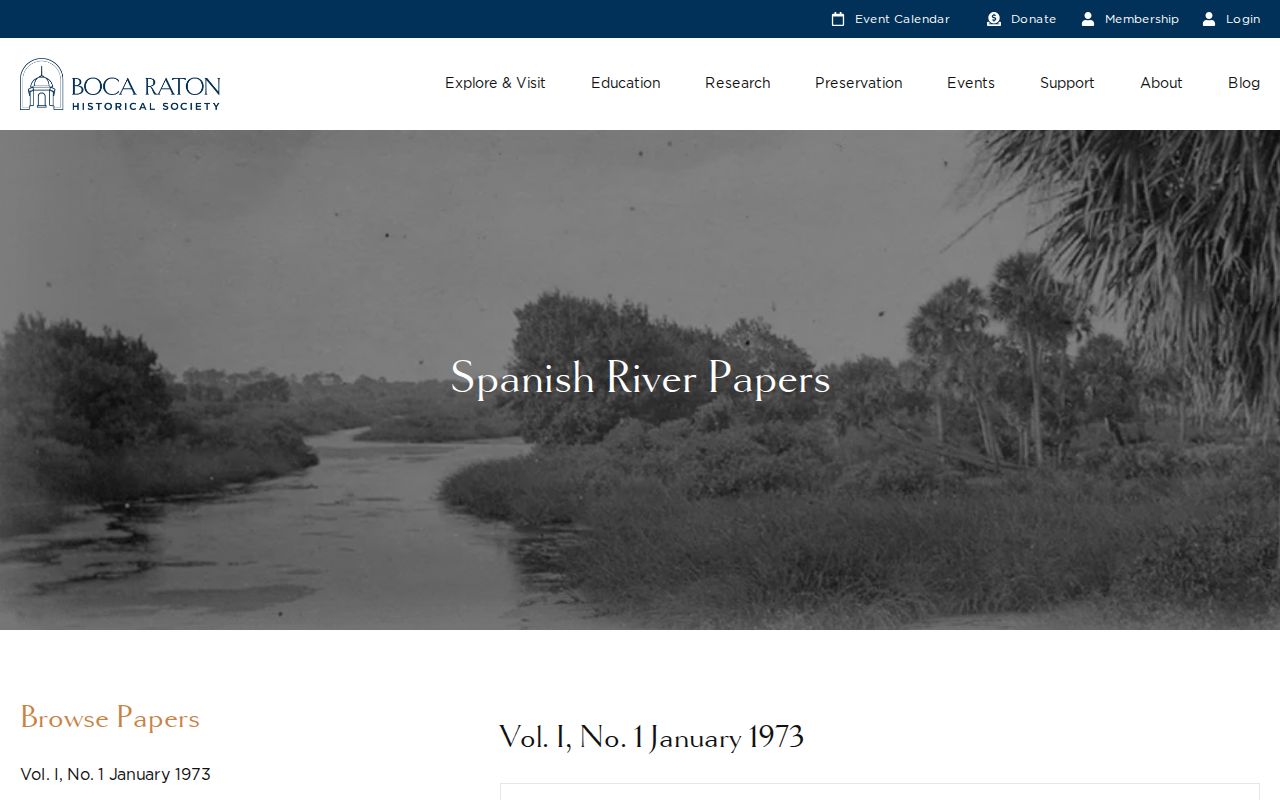
The collection places an address within a changing community when a directory or web deed index cannot carry the full trail.
For state-level fallback, the State Archives of Florida provides catalog and research services beyond the local shelf.
Archive catalogs can connect older county, map, government, and manuscript evidence without inventing unconfirmed coverage.
Date a Boca Raton Building
Permits can show when a structure was built, enlarged, repaired, or inspected, along with an applicant or contractor. They do not establish when a person moved. Boca eHub offers guest searches for permits, plans, inspections, code cases, requests, and licenses. Its address and PCN fields help after the parcel is fixed.
Coverage is uneven. The city's legacy permit history reaches through February 13, 2023, while eHub includes active permits from 2016 forward and did not convert every inactive record. A full construction or annexation-to-present search may require a specific city public-record request. The separate written permit and code search costs $150 per location and excludes financial liens. For an unincorporated postal Boca parcel, use the county custodian.
Note: Permit dates describe work at a parcel; they must not become unsupported arrival or departure dates for past residents.
Close a Boca Raton Trail
Newspapers, obituaries, probate dockets, cemetery material, and estate deeds often explain why an ownership line ends. The Weekly Tattler dates to 1938, The Pelican covers an irregular 1948 to 1953 run, and Boca Raton News routes begin in 1955. A sale ad can connect a street to a subdivision. An obituary may name survivors or a former home, while probate can link a decedent, heirs, and an estate transfer.
BRHS collections add depth that a title index cannot. Pearl City oral histories preserve residents thinly represented in printed directories. The Chesebro diaries span 1903 to 1935, and the Gates collection includes abstracts and real-estate records. Cite the item, compare its date, and confirm names with recorded or vital evidence. Early searches should also try “Boca Ratone,” the historic spelling found in incorporation-era material.
Use Boca Raton History Lawfully
Previous-resident research works best as house history, genealogy, estate research, or an effort to understand how a block changed. Preserve uncertainty. A deed proves a recorded interest, a directory proves a listing, and a census describes a household on one date. None should be stretched into a claim about a living person's current location.
Florida confidentiality rules protect some addresses and records. The Address Confidentiality Program provides eligible victims a substitute address, while specified protected occupations may qualify for exemptions. Sealed files, confidential births, driver data, utility accounts, and private household records do not become open merely because other records are public.
Lawful use. Research Boca Raton previous residents for family, estate, and property history. Never use a record trail to watch, threaten, harass, or harm a living person.